



ZF Wind Power launches modular powertrain platform
- Details
- Category: Product News
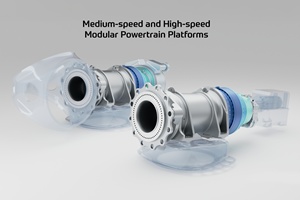 ZF Wind Power has launched a modular powertrain platform for wind turbines, based on its Shift gearbox concept and the company’s powertrain development experience. The platform combines modular gearbox and main bearing unit configurations with an integrated generator design. ZF says the architecture can be configured for different turbine designs, load conditions and operating environments.
Indexation could reduce offshore wind project costs in Germany
- Details
- Category: Industry News
Indexation of strike prices could reduce the costs of offshore wind projects in Germany, according to a short analysis by Frontier Economics commissioned by the German Offshore Wind Energy Association (BWO). The analysis examines the potential effect of indexation on offshore wind projects tendered between 2027 and 2030 under the planned introduction of Contracts for Difference (CfDs).
BGB launches circularity collection service
- Details
- Category: Company News
BGB has announced the launch of its new Circularity Collection Service. The service is designed to support regional operations and maintenance providers and supply chain partners across the UK.
Enercon launches financing fund for wind projects
- Details
- Category: Product News
Enercon, together with financing partners, has launched the Enercon Finance Solutions Fund, offering mezzanine loans to operators developing new projects with Enercon wind turbines, refinancing existing wind farms or seeking to release equity capital.
Onyx Insight launches Cortex platform for wind turbine monitoring
- Details
- Category: Product News
Onyx Insight has launched Onyx Cortex, a platform that combines condition monitoring, performance analytics and maintenance workflows for wind turbines. The platform integrates data from supervisory control and data acquisition (SCADA) and condition monitoring systems (CMS), including third-party systems.
deugro opens wind turbine component handling facility in Antwerp
- Details
- Category: Company News
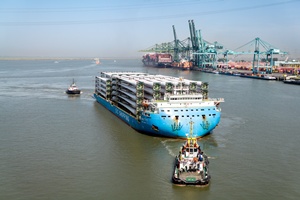 deugro commissioned a new port setup in Antwerp, Belgium, for a global wind turbine manufacturer. The facility provides storage and handling space for wind turbine components, including rotor blades, nacelles and tower sections. It also has equipment for handling breakbulk cargo.
We4Ce and Adios Technology combine operations under eProWind
- Details
- Category: Company News
We4Ce and Adios Technology, both based in Enschede, the Netherlands, have combined their operations under the eProWind brand. The new structure brings together We4Ce’s rotor blade engineering activities and Adios Technology’s de-icing technology. eProWind will provide services covering the rotor blade lifecycle, including structural engineering, yield assessment, lifetime extension, damage assessment, blade root repairs and de-icing.
Flender presents new generator concept for wind turbines
- Details
- Category: Product News
Flender is presenting a new generator concept under its Winergy wind energy brand. Winergy Genera is a validated generator design concept and technology package that can be configured for individual turbine projects. The Genera design has a power density of up to 700 W/kg, which is 10% higher than previous versions.
Huisman to deliver cranes for Cadeler’s T-class vessels
- Details
- Category: Projects and Contracts
Huisman has been awarded a contract by Cosco Shipping (Qidong) Offshore (Cosco) to deliver two leg-encircling cranes and two auxiliary cranes for Cadeler’s next-generation T-class offshore wind installation vessels.
Offshore wind investment remains under pressure
- Details
- Category: Industry News
Offshore wind is continuing to deliver projects in 2026, but the pipeline of new investment remains under pressure, according to TGS | 4C’s latest quarterly Global Market Overview. Only 2.1 GW has reached final investment decision (FID) so far in 2026, while more than 12 GW is expected to enter operation this year. By year-end, 5.6 GW is expected to reach FID, which would make 2026 the second-lowest year for offshore wind investment decisions since 2020, according to the report.
- Jotun report highlights challenges to wind project profitability
- Vestas introduces V182-7.2 MW wind turbine
- German onshore wind auction awards 2.52 GW
- European Energy wins support for 89.6 MW in German wind tender
- Eiffage joint venture wins second 2 GW offshore converter platform contract
- Ørsted tenders for bird and bat monitoring in Polish Baltic Sea
- Revolution Wind completes turbine installation off Rhode Island
- Inauguration of He Dreiht offshore wind farm
- HybridGenerator introduces HG Lite for temporary power at wind farm construction sites
- Oracle invests in 1.7 GW of wind generation in Texas
- Masdar and Taaleri Energia inaugurate 154 MW Čibuk 2 wind farm
- Masdar signs agreements on German offshore wind and battery storage
- Studio Rinnovabili appoints Iva Lubenov as Head of Construction
- Construction starts on TeneT’s second 2 GW jacket
- Vineyard Wind and GE Vernova resolve commercial litigation
- Qualitas Energy launches Navaris as new German brand
- Prokon selects OneView for 918 MW wind fleet
- CNC Onsite to open US subsidiary
- Vestas announces three orders totalling 119 MW
- Enerpac introduces new hydraulic pumps and tool storage system
- Dehn introduces digital platform for wind turbine lightning monitoring
- Radar system monitors bats around wind turbines in real time
- Korean Register and partners develop LNG carrier with WindWings
- ABO Energy agrees to sell Argentine renewable energy portfolio
- The WindEurope Board has elected Ørsted CEO Rasmus Errboe as its new Chair
- Nordex receives 91 MW order in Brandenburg
- Deutsche WindGuard adds AI assistant to asset management system
- GE Vernova to supply turbines for 29.4 MW Japanese wind farm
- Econergy acquires 740 MW French wind platform
- Powercon Group appoints Ravindra Chauhan to business development role