



 Geophysical surveys carried out over the past two years at Vattenfall's Nordlicht I and II offshore wind farm sites identified several magnetic anomalies on the seabed. Expert analysis indicated that these objects were likely unexploded ordnance dating back to World War II. During the spring, each anomaly was inspected individually using a remotely operated vehicle. This confirmed the presence of three sea mines, each containing an explosive charge equivalent to approximately 200–300 kilograms of TNT.
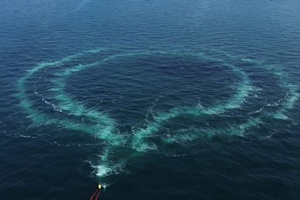
Following a detailed permitting process, the mines were disposed of safely in September through controlled on-site detonations. A key element of the operation was the use of a 90-metre-long bubble curtain vessel. This vessel deployed a double hose ring on the seabed to create a curtain of air bubbles around the detonation area, reducing underwater noise levels to limit disturbance to marine life.
Regulatory conditions also prohibited simultaneous noise-generating activities in the German Bight. As a result, close coordination with other offshore projects in the area was required, including pile-driving activities being carried out by RWE.
The Geoscience project team coordinated seven vessels during the disposal campaign. These included support vessels for safety and exclusion zone management, the bubble curtain vessel and a remotely operated vehicle support vessel responsible for monitoring and executing the detonations.
With the seabed clearance completed, the Nordlicht offshore wind project can proceed with planned installation activities.