




- Details
- Category: Articles
 Reducing Wear on Wind Turbines
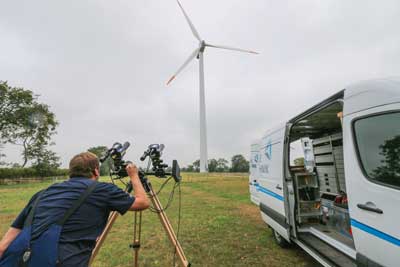
Deutsche Windtechnik has been measuring wind turbine rotor blades using a laser-based blade angle procedure since 2015. The company has discovered serious shortcomings on some of the 273 Vestas turbines examined to date. Where the relative blade angle deviations were 0.5 of a degree or more, the service technicians corrected the settings. This makes the wind turbines run more quietly, ensures less strain on the material and reduces wear.
By Torsten Wohlert, Deutsche Windtechnik Service, Germany
Deutsche Windtechnik is to carry out measurements on all the wind turbines it maintains as part of a full maintenance contract that includes large components. This year the service provider will be checking the Vestas, NEG Micon and Siemens wind turbines. Similar examination of offshore wind turbines will follow.
- Details
- Category: Articles
Environmentally Friendly Solutions for Ambitious Technical Tasks
 Lubricating oils and greases for offshore wind energy plants have to meet a broad range of special requirements. Among these are not only technical specifications but also rigid environmental standards. This article describes the most severe technical challenges as well as valid environmental requirements, and highlights the very ambitious product development process.
By Martin Wünsch, Head of Research and Development, Lubricant Consult GmbH, Germany
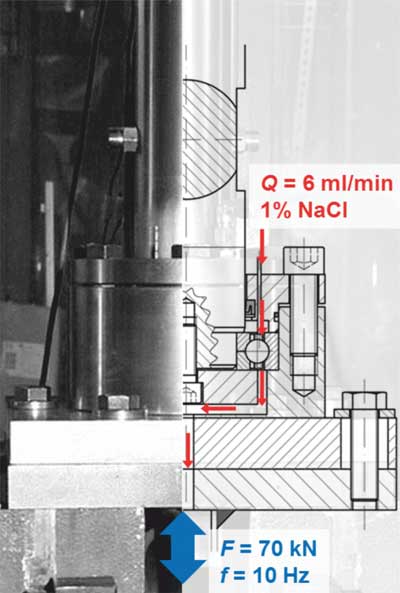
The development and construction of wind energy plants involves numerous technical challenges. A large number of moving components, working temporarily under high stress conditions, have to be well engineered and sufficiently lubricated to prevent them from early failure which would lead to high costs for maintenance and repair, unplanned downtime and production loss. Bearings for the pitch adjustment, for example, rotate very infrequently and are therefore prone to false brinelling and oscillation wear, resulting in damage to the bearing raceways. Thus, the technical demands for lubricants in such applications are extremely high. Moreover, these products, like all chemicals used in the offshore sector, have to meet strict environmental requirements.
- Details
- Category: Articles
Active Flap Systems Coming Closer to Market
The idea of active flap systems on wind turbine blades is to reduce the variable loading on the blades by continuously adjusting the shape of the trailing edge of the blade to counteract the fluctuating loads from the wind. The reduction in loading means that a larger rotor can be mounted on the same turbine platform and the power production can be increased. In this way the cost of energy (COE) can be reduced, which is the overall goal with the new smart blade control.
By Helge Aagaard Madsen, Research Specialist, DTU Wind Energy, Denmark
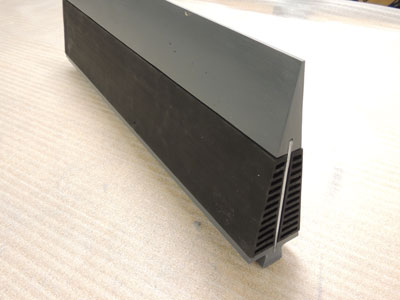 Considerable research on active flap systems, or morphing trailing edges of wind turbine blades, has been ongoing for almost 15 years at many wind energy research institutes such as Delft University (the Netherlands), Sandia Laboratories (USA) and DTU (Denmark). At present the different systems are being studied intensively by many European Research Institutes and universities within two ongoing EU funded projects InnWind and AVATAR. The numerical studies show, in general, very promising potentials for load reduction, reaching 40–50% for the different flap systems with the fastest response and with flaps covering a major part of the blade span. The active flap systems will work in parallel with the pitch system, which is the existing method for controlling the loads on the blades. In contrast to the pitch system, which gives the same control action along the whole blade, the flap system is a distributed control system.. It means that different control actions can take place along the blade and this becomes more and more important as the blade size increases. For example, for a 70-metre blade the influence of a gust can be quite different from the tip part to the middle part of the blade. Numerical studies show that pitch and flap systems can work efficiently in parallel giving higher load alleviation than, for example, a cyclic pitch system, and, at the same time, reduce the pitch activity considerably. As pitch bearing wear can be a major challenge for cyclic pitch applications the reduction in pitch activity is an attractive goal.
- Details
- Category: Articles
Ring-Shaped Bearingless Generator with Buoyant Rotor and Modular Structure
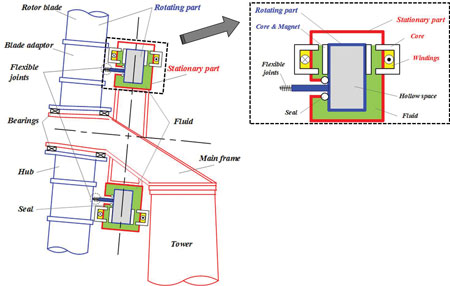 In wind turbines, bearing failures have been a continuing problem and have accounted for a significant proportion of all failures. Bearing-related downtime is among the highest of all components of wind turbines. The location of wind turbines is moving offshore. However, to access offshore sites is difficult and thus wind turbines with high reliability and availability are required. Direct-drive wind generators are argued to have higher reliability and availability than geared generators. However, direct-drive generators require a large diameter, which results in a large mass and high cost, in order to get a high torque rating compared to geared generators. It is disadvantageous in terms of manufacture and maintenance to construct direct-drive generators with a large diameter as a one-body structure. In scaling up the power of direct-drive generators, the structural part becomes dominant in the total mass of the generators. Therefore, it is necessary to find a solution to significantly reduce bearing failures and structural mass, and to facilitate manufacture and maintenance for large direct-drive wind generators.
By Dr Deok-je Bang, Korea Electrotechnology Research Institute, South Korea
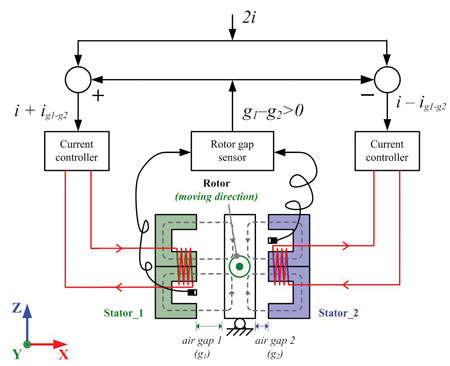 In this article, a new generator concept, a ring-shaped bearingless permanent magnet (PM) generator with a buoyant rotor and magnet and core modules, is described as a solution to significantly reduce the bearing failures and the structural mass, and to facilitate manufacture and maintenance for large direct-drive wind turbines.
- Details
- Category: Articles
AWES Could Potentially Halve Offshore Wind LCOE
UK-based Kite Power Solutions (KPS) is one of a handful of developers of airborne wind 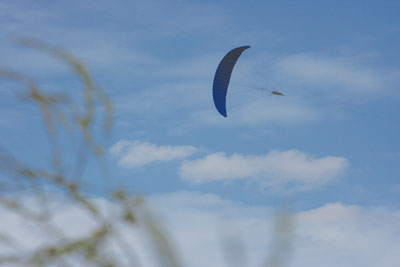 energy systems (AWES) who are pushing forward a technology to challenge the conventional horizontal axis wind turbines (HAWTs) in the utility-scale offshore market. Floating offshore AWES could potentially halve offshore wind levelised cost of energy (LCOE) compared with HAWTs. In this article, David Ainsworth of KPS explains the challenges in bringing this novel technology to market in the next ten years.
By David Ainsworth, Business Development Director, Kite Power Solutions, UK
Wind is one of the best resources available to combat climate change, but only contributes 1% to world energy needs. Offshore wind is only deployed commercially in Europe and China, with USA and Japanese projects on the horizon. Is this because we cannot afford offshore wind in its current form?
- Details
- Category: Articles
Reliable Verification of Design Parameters at Prototype and Serial Turbines
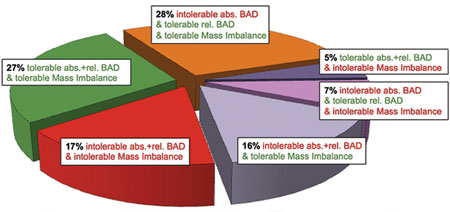 For reasons of cost reduction, modern large wind turbines and blades are designed to use less material and to make use of new materials. They are designed using new simulation tools and smaller safety factors, going beyond established knowledge. Therefore, turbine type certification requires simulation validation by real-life prototype measurements to prove that design dimensions (e.g. clearance between blade tip and tower), parameters and assumptions assure safe operation during the planned service life. For safe and reliable operation, every serial turbine also has to comply with certified design parameters. This keeps O&M costs and lifetime consumption low, despite unmanned 24/7 operation in remote areas. Hence, highly accurate but also cost efficient and safe measuring methods are needed to avoid excess fatigue loads, such as those from resonance issues related to the tower’s natural frequencies or intolerably high rotor imbalance and blade angle deviation. For these applications, video-based analysis is a suitable method to measure motion and vibration.
By Anke Grunwald, Christoph Heilmann and Michael Melsheimer, BerlinWind GmbH, Germany
For reliable, long-lasting and safe operation, as well as low O&M costs and avoidance of damage-related standstill, it is essential to validate design simulation by prototype measurements. In addition, serial turbines have to comply with design parameters relevant for fatigue and lifetime consumption. This requires accurate and effective field measurements.
- Details
- Category: Articles
Assessing Long-Term Hub Height Wind Specifications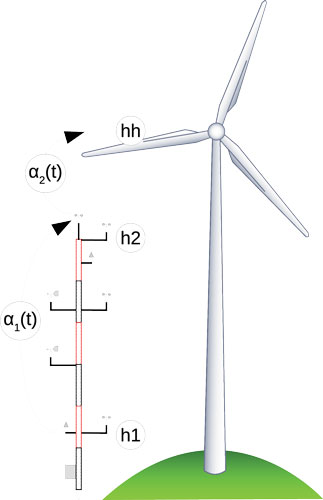 Numerous wind energy yield assessments are based on measurements carried out with a met mast located at a lower height than the hub of the planned wind turbine. This article deals with the issue of vertical extrapolation of measured wind characteristics. It benchmarks four distinct empirical extrapolation methods based on a simple measurement set-up – two heights of anemometers, a wind vane, a short-term measurement of a remote sensing device (lidar, sodar) and different assumptions about the wind shear (α). These methods were tested on nine of Maïa Eolis’ 80-metre met masts in France and benchmarked to a WAsP calculation.
By Olivier Coupiac, Maïa Eolis, France
The first three methods, alpha-series, alpha1 (α1)-sampling and alpha-correlation assume the consistency of the wind shear along and above the met mast, which makes them quite sensitive to near-ground turbulence and to the height of the first anemometer. The last method, alpha2 (α2)-sampling, investigates the wind shear dependency on wind speed, direction and atmospheric stability.
A permanent challenge for industrial wind assessment is to select the most efficient way of assessing the long-term hub height wind specifications, though keeping the uncertainties at minimum. Performing long-term measurement campaigns at great heights can be incompatible to project timescale and budget. However, the vertical extrapolation can be a major source of uncertainty [refs 1, 2, 3].
Methods
The tested methods rely on a middle-term (typically one year) wind measurement campaign carried out with a met mast at a lower height than the planned wind turbine's hub (hh). We assume here a basic equipment set-up with one wind vane and anemometers at two different heights h1 and h2 (with h2>h1) in order to calculate the vertical wind shear – see Figure 1.
Alpha-series
We assume here that the vertical wind shear α2 between the mast and the hub equals at any time the wind shear along the mast α1 calculated from the two wind speeds u2 and u1 at heights h2 and h1. The hub height wind speed uhh time-series is then calculated from the highest wind speed u2 and α1.
Alpha1-sampling
Because of the near-ground turbulences, the calculation of α1 can rely on a noisy signal and result in non-realistic values for the hub height wind speed uhh. The α1 sampling method aims to bypass this drawback by averaging α1 in wind speed u2 and direction bins. Another version of this method uses atmospheric stability bins, which try to account for the strong time and seasonal dependency of the wind shear, as shown in Figure 2. The new assumption will then be that the two vertical wind shears α1 and α2 are on average equal for each direction, wind speed and stability bin.
Estimating atmospheric stability
As the measurement set-up of the met mast often does not allow a reliable estimation of atmospheric stability, this information is extracted from reanalysis data [ref. 4]. In this article we will only deal with the Monin-Obukhov length from MERRA [ref. 5] data. Monin-Obukhov length values (MOL) are sorted into three different stability classes, as detailed in Table 1.