



 A turbine installation concept originally developed for offshore wind could reduce installation and operating costs at large onshore wind projects, according to a new study. The SENSE (Self-Erecting Nacelle & Service) system developed by SENSEWind has been assessed for use at the proposed Teviot Wind Farm in Scotland. Modelling carried out by Natural Power using data from SENSEWind and Muirhall Energy compared the system with a conventional tower and crane installation approach for a typical Scottish onshore site.
The analysis indicates that using the SENSE system could reduce the levelised cost of energy by around 8.1% for the Teviot project. Natural Power also carried out sensitivity assessments for simpler and more complex sites, indicating potential reductions in levelised cost of energy ranging from about 4.6% to 14.2%.
The SENSE system transports the turbine’s rotor nacelle assembly to the top of the tower using an integrated carriage mechanism rather than a large installation crane. The system includes a modular tower design with a lattice structure in the lower section and tubular steel sections above.
Rails integrated into the tower allow a carriage to move the rotor nacelle assembly up and down the tower. Working platforms attached to the rail system can also support inspection, maintenance and major component replacement activities.
The concept has previously been demonstrated on a Vestas V27 turbine and is being developed for use with modern large-scale turbines.
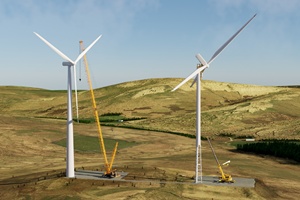
The proposed Teviot wind farm, which could reach up to 350 MW of installed capacity, is expected to use turbines in the 6–8 MW range with tip heights of up to 240 metres. The project is planned to begin operations around 2033.