




- Details
- Category: Articles
 How AI Is Transforming Market Stability and Grid Resilience
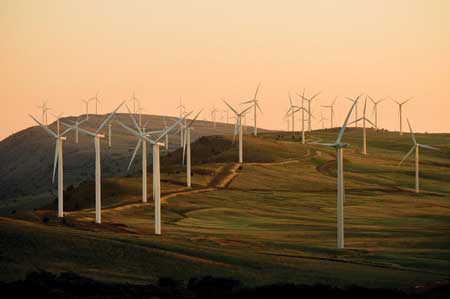
Globally, the energy industry is undergoing a rapid shift towards renewable energy, with wind emerging as one of its fastest-growing sectors. Carbon-free, cost-effective and inexhaustible, wind has proven to be a popular alternative to fossil fuels for companies looking to meet their climate goals. However, wind is unpredictable. Sudden shifts in wind speed – or wind ramps – disrupt the flow of energy generated by wind turbines, leaving energy professionals scrambling to resolve grid imbalances at a moment’s notice.
By Jeffrey Wetterlin, Energy Lead and Meteorologist, Meteomatics, USA
As climate change exacerbates weather volatility, the energy industry can no longer rely on traditional weather tools to inform planning. Professionals need easy access to accurate climate insights to respond quickly to potential events. Wind ramp technology – artificial intelligence (AI) tools powered by hyperlocal, real-time weather intelligence – provides a new solution. By integrating weather intelligence into AI platforms used by energy professionals, wind ramp technology can detect events earlier, giving energy traders and utilities the lead time they need to prepare and respond to wind ramps with confidence.
- Details
- Category: Articles
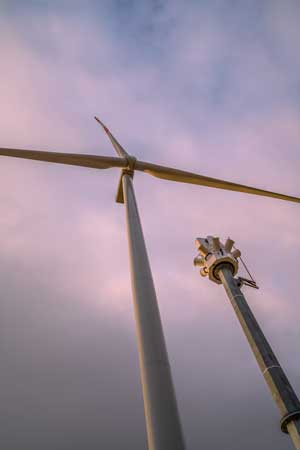 Bird Protection in Evolving Turbine Architectures
As bird protection becomes a more established part of wind farm development and operation, the engineering discussion is changing. Detection performance still matters, but the focus is shifting beyond proof-of-concept capability towards the maturity of solutions that can work within turbine and plant controls, adapt across OEM environments, and align with modern cybersecurity expectations. IdentiFlight was developed in response to that challenge. Built by Boulder Imaging, a company founded in 1995 with expertise in artificial intelligence, machine vision, and high-precision optical systems, IdentiFlight reflects decades of experience developing integrated solutions for complex manufacturing and industrial applications.
By Aaron Coppage, Director of Global Field Operations, Boulder Imaging, USA
Performance Now Includes Integration
For years, discussion around bird protection systems centred on a familiar set of questions: Can the system detect birds reliably, classify species accurately, and reduce collision risk without excessive curtailment? Those questions still matter, but they no longer tell the whole story. In practice, additional questions such as the following have become just as important: Can an environmental solution be securely integrated into plant operations with minimal impact on plant operation efficiency and security risk profile?
- Details
- Category: Articles
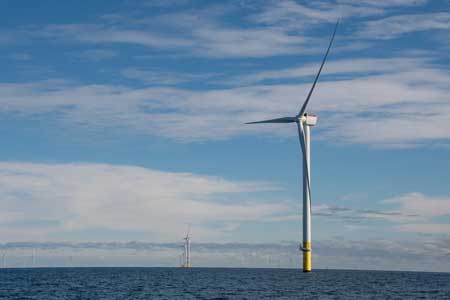 New Offshore Wind Projects Will Strengthen Northeastern Grids
Two offshore wind projects in the Northeastern USA recently achieved important milestones. In mid-March 2026, Ørsted’s 704MW Revolution Wind off the coast of Rhode Island generated its first power, while in April, the 800MW Vineyard Wind completed construction and activated its power purchase agreement with Massachusetts utilities.
By Sam Schacht, Project Director, Clean Energy States Alliance, USA
These enormous projects have been a decade in the making and provide an unprecedented addition of offshore wind power to the USA, delivering a massive injection of electric generation capacity at a time when load growth is generating serious anxiety among grid operators and policymakers.
- Details
- Category: Articles
Turning Supply Chain Uncertainty into Measurable Threat Information
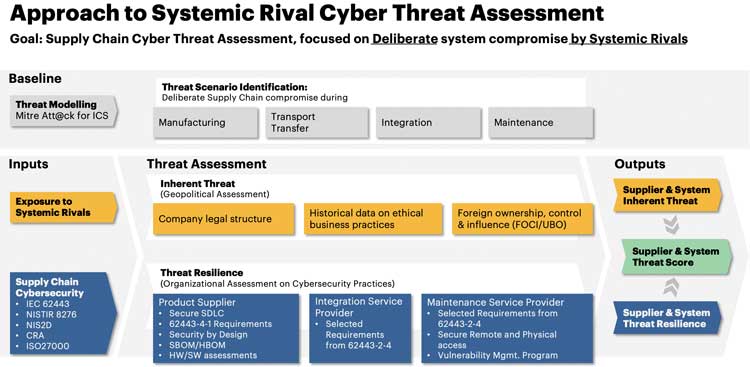
With wind power growing in the European grid, sophisticated adversaries are paying closer attention, recognising that a coordinated disruption of wind farms can undermine an entire region’s electricity supply. The operational technology systems that keep wind assets spinning are only as secure as the suppliers who build, integrate and maintain them. A cyberthreat assessment methodology, focused on deliberate system compromise by supply chain threats and developed by Accenture in collaboration with WindEurope, provides asset owners with an objective, evidence-based framework for evaluating how much risk each vendor introduces and where mitigation investment will have the greatest impact. Built around formal definitions of geopolitical risk, a structured scoring architecture, and alignment with international standards, it equips procurement and risk teams with a tool that is both analytically rigorous and operationally usable.
By Ignacio Paredes and Pedro Marín Fernandes, Accenture, Spain
- Details
- Category: Articles
INTEGRIA: Towards Data‑Driven Structural Integrity in Floating Wind Turbines
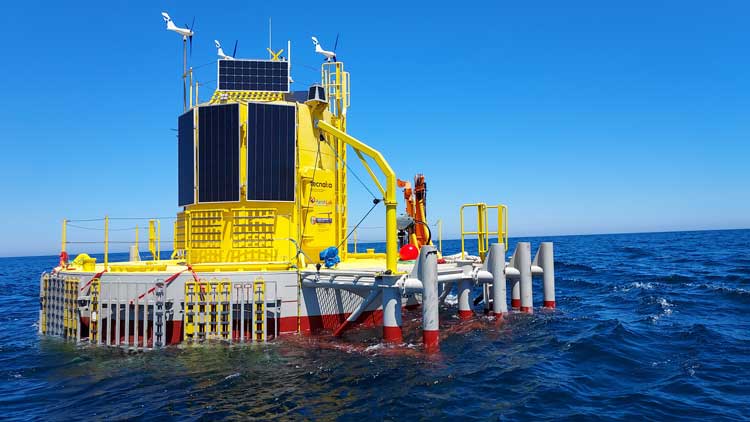
The INTEGRIA project, ‘Research into structural INTEGRity in floating offshore wind using models based on Artificial Intelligence’, was launched to develop an AI‑based digital model supporting the structural integrity management of floating wind turbines. Since its start in 2023, the project has worked to ensure that components generate data that feed digital models for detecting, forecasting and preventing failures caused by fatigue, degradation and other critical mechanisms. These models will enable decision-making algorithms for O&M, helping extend the service life of floating offshore wind farms. The consortium includes 11 leading Basque companies in floating offshore wind. This article summarises the project’s main work and results.
By Basquenergy Cluster, Spain
- Details
- Category: Articles
Automated Shop-Floor Measurement in Large Offshore Structures
Offshore wind structures are growing in scale and geometric complexity, while tolerances are tightening across nacelles, blades, towers, transition pieces, and foundations. In serial production environments, maintaining (sub)millimetre accuracy on components exceeding 100 metres in length is no longer simply a quality control requirement; it is also an imperative determinant of cost, safety and performance. Traditional metrology approaches struggle to keep pace with these demands, particularly on dynamic shop floors, where throughput, repeatability and operator safety are critical.
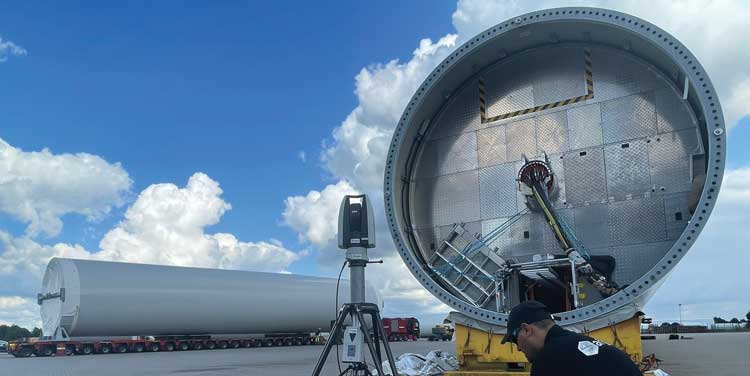
By Geert Creemers and Jef Cambré, Argon Measuring Solutions, Belgium
- Details
- Category: Articles
Floating Offshore Wind Platform Strengthening Transparent Seabird Impact Assessment
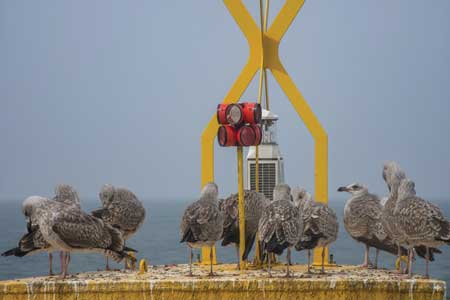 Floating offshore wind is not just about clean megawatts; it is also a unique opportunity to understand how wildlife and renewable infrastructure share space. Around the DemoSATH floating platform off the Basque coast, Saitec Offshore Technologies has turned energy production into a living laboratory: DemoSATH Lab. While this article focuses on birds, one of the most sensitive and high-priority environmental lines of work, DemoSATH Lab brings together a wider monitoring programme, including underwater noise, marine fauna interactions, and carbon-footprint assessment, among others. Together with RWE and the Kansai Electric Power Corporation, Saitec is pioneering new ways to monitor birds in the Mundaka-Cabo de Ogoño Special Protection Area for Birds. After two years combining field ornithology, automated detection, and continuous CCTV, DemoSATH Lab is now advancing with artificial intelligence (AI) to improve detection, recognise ringed individuals, and quantify collisions using blade-facing cameras, maximising knowledge, transparency and biodiversity protection.
By Ane Ugena Ispizua, Javier Del Real Tuñón and Enrique Garea García, Saitec, Spain