



Protecting Offshore Wind Structures for Longer Service Lives
Offshore wind towers and foundations operate in one of the most demanding corrosion environments in the energy sector. 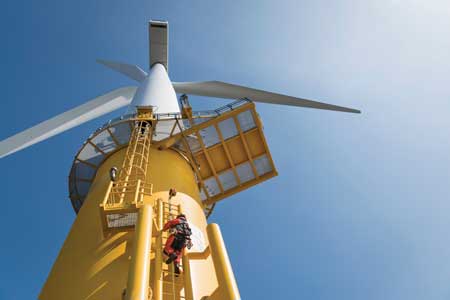 Larger turbines, installed further offshore and exposed to higher mechanical loads, place increasing demands on protective coating systems that must maintain performance for service lives of 30 years or more. While many current coating specifications are based on experience from offshore oil and gas structures, wind turbines experience different challenges, including continuous vibration, cyclic loading, and limited access for inspection and repair. Reducing maintenance requirements is becoming an important factor in lowering life-cycle costs, driving interest in coating systems that offer long-term adhesion, abrasion resistance, and resistance to cathodic disbondment. At the same time, coating development is moving beyond traditional qualification criteria towards performance-based testing methods that better reflect offshore wind conditions. Advances in epoxy technologies, application processes, and testing approaches are helping to improve durability while supporting lower-emission and more sustainable construction practices.
By Eric King, Global Segment Manager, Power and Mining, Protective and Marine Coatings, PPG, USA
To reduce the levelised cost of electricity for offshore wind, developers are focused on extending service life with coatings that provide corrosion protection with minimal maintenance requirements. Effective corrosion protection systems are a key part of lowering operational expenditure and managing life-cycle impacts of wind towers.