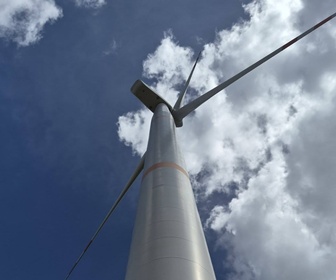





The Case for Robotic Quality Checks in Blade Factories
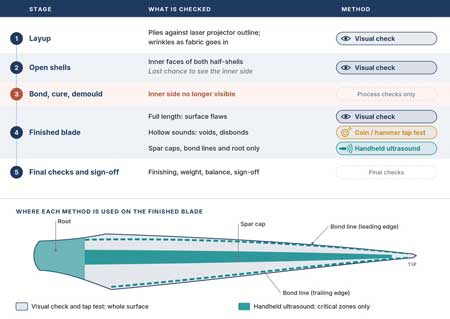 Most of a finished wind turbine blade is still checked by people walking its length with a small hammer and a handheld ultrasound probe. Instrumented checks usually cover only the most critical zones. Yet the defects that matter most, such as fibre wrinkles inside the laminate and weak bond lines between the shells, are often the hardest to see. This article looks at why blade inspection has stayed largely manual. It explains why automating inspection is a more practical first step than automating lay-up and what a realistic robotic inspection set-up could look like. Finally, it sets out how a manufacturer could start small, what to measure, and what to expect in the first year.
By Pravin Luthada, CEO and Co-founder, Addcomposites, Finland
Blade makers already know that defects cost money. The harder question is why most quality checks still depend on human eyes and hands and what it would take to change that without rebuilding the factory.