



Optimising Aerodynamic Efficiency at the Wind Farm Design Stage
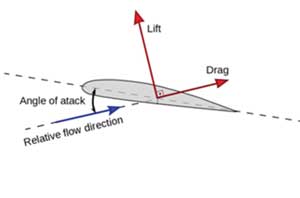 Reduced wind turbine performance, as compared to the manufacturer’s design or warranted power curve, is common outside of the turbine design conditions. On many sites, such as those with steep slopes or considerable forestry, or simply those that experience certain atmospheric conditions, turbines will regularly operate outside the ideal operational conditions without falling outside the operational envelope. This typically results in reduced wind turbine performance and can have a major impact on overall project performance. Prevailing has applied established angle of attack based aerodynamic theories to produce a method of modelling the aerodynamic efficiency of a wind turbine for supplied wind conditions. The presented methodology can be used to provide turbine performance predictions. Accurate turbine performance predictions contribute to better wind farms both by optimising turbine layouts and providing improved preconstruction energy yield estimates.
By Alex Head, Prevailing Analysis, USA and Joel Manning, Prevailing Analysis, UK
Minimising wind farm underperformance requires turbine performance to be quantified at every potential turbine location at the project design stage. This requires both known wind conditions, and a method of calculating turbines’ response to these conditions. Modelling and analysis can be used to site turbines optimally to reduce risk of decreased performance.