



Designing Products that Function Reliably in Challenging Applications
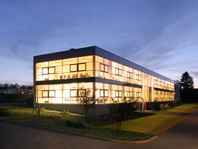 Moog has recently officially inaugurated its new Wind Training Center at an opening ceremony involving customers and partners in Unna, Germany. The 1,300 m² (14,000 ft²) facility is designed to provide technical training programmes to Moog’s global wind energy customer base. To mark this occasion, we took the opportunity to interview Seán Gartland, Vice President Moog Inc., and President of the Industrial Group.
By Floris Siteur, Publisher, Windtech International
{access view=!registered}Only logged in users can view the full text of the article.{/access}{access view=registered}Within the Moog organisation the wind division is part of the industrial business segment. What percentage does the wind business make up and how do you think this will develop?
Currently wind is about 25% of the Industrial Group and we are pretty optimistic about the growth of the wind segment. We think wind will grow quickly and probably grow faster than some other industrial segments of our company. We believe that Moog is well positioned to grow in line with if not better than the market growth.
How do you feel Moog is positioned in the industry if you look at where the industry is heading and compared to the competition?
I believe the industry is heading to bigger and more complex turbines which ask for more innovation. Bigger and more complex turbines demand more reliability and a different way of monitoring. In our portfolio of products we nowadays have electric pitch systems and slip-rings, and we have the blade monitoring system using sensors on the blades, but more importantly we support individual pitch control and load management on turbines. These issues will become very important in the future considering the size of future turbines. The size of turbines is also going to affect the actuation of pitch systems because pitch systems will need to work much harder. If you take into account all this, and then consider that we are used to developing products for harsh and difficult environments which require complex and reliable products, you will see why we believe that the way the industry is heading is a good fit for Moog.
Moog entered the wind energy business partly autonomously but also by making a number of acquisitions like LTi REEnergy. What strategy is Moog planning to follow in the future with regards to this?
The growth of our company comes from a combination of organic development and through acquisitions. We will continue to seek suitable acquisitions to create growth, but we will continue to invest in technology and developing new solutions. It is neither exclusively one thing nor the other, but continues to be a combination.
Moog is a big company active in many industries. What is the importance of the other industries for product innovation within Moog and with which other industry is there the most synergy?
This is one of the great advantages of our company. We have experience in developing solutions for difficult environments. For instance, we have products for mechanical actuation used in oil and gas exploration. These go down the hole, and it is pretty hot down there, and you cannot easily take back products or a system if you have a problem, so reliable products are then very important. If you take that know-how and technology and apply that to products for the wind industry it gives us a great advantage. The same applies for the other segments of the company. Technology is one issue, but we also have the experts working for us with experience in different areas. We are able to transfer technology across markets within the company to develop solutions for a specific industry. Our culture is one of collaboration trust and working together. We support the idea of easily getting together and sharing ideas. For example, we acquired a company which specialised in vibration control for aircraft. Vibration is also an important topic for the wind industry. The culture within Moog is that we can easily pick up the phone and can talk directly to the person who knows the technology. But we also gather experts together from different parts of the company to contribute to the development. What we look for at Moog is what might be technology for a certain industry and then go from there with the development.
Technology wise, what do you think will be the next big step? The most common design used for wind turbines is the HAWT. In your opinion what do you think turbines will look like in the future?
It is important for the wind industry that it becomes economical. Before that is reached big steps have to be taken. More economical means harvesting more wind. In order to do that, uptime, reliability and the scale of turbines must increase. If you look at the wind turbines, and are thinking about scale, there will be turbines of between 5MW and 10MW, with even bigger units coming along in the future. Then you are talking about dimensions of blades, towers and power units which have not been experienced before. It will be very important that there is more innovation in technology. Important issues are, for instance, how do you deal with vibrations? How do you deal with uptime and serviceability? How do you deal with load control? Other designs like high-altitude wind will work as well, but have a longer way to go to become more economical than the current designs. So I believe the focus will be on optimising the current designs. The wind industry is no longer a niche industry, it is mainstream. And now that this industry has become mainstream there is more money available for innovation.
In your opinion, what is the biggest bottleneck for growth of the wind industry?
The bottlenecks are different for different places. In the USA they are political. There is insufficient political willpower to provide a long-term commitment from the political establishment in the USA. That is really holding back the development of the wind industry in the USA. I think in Europe there is an increase in political commitment. You have to worry a little about the economy and whether the state of economies will have a negative influence on the development of wind farms for a period of time. But we are not seeing that as a real bottleneck and think that the industry will continue to develop going forward. In Asia it is a different situation, especially in China. China is a huge market and there is going to be consolidation of the manufacturers in the future. It is inevitable considering the number of manufacturers nowadays. But the one thing that is out there is the need for more energy. And, even with more energy efficiency, the need for more generating capacity will go on. The recent nuclear accident in Japan also resulted in more focus on renewables, especially in Europe. All this together is an opportunity for the wind industry.
About the Company
Moog Inc. is a worldwide designer, manufacturer, and integrator of precision control components and systems. Moog’s Industrial Group designs and manufactures high performance energy wind turbine solutions for pitch control, slip ring power transmission, blade sensing and rotor monitoring for OEMs, wind farm operators and integrators in the wind energy market. They combine electric, hydraulic, and hybrid technologies with expert consultative support to help performance-driven companies design and develop their next-generation turbines.
Seán Gartland is Vice President of Moog Inc. and President of the Industrial Group. Seán has worked in Asia for 15 years, and has been based in Japan for the past 11 years. He heads up the global Executive Committee of Moog International. Seán has held a succession of increasingly senior positions in a number of business units of Moog across Europe and Asia. He has worked in the Space and Defense segment as well as the Industrial segment. Seán is a native of Ireland, and he joined Moog 24 years ago in his native country. He initially worked on various subsystems of the European Space Agency’s Ariane V rocket project, including critical flight hardware supplied for the upper stage of the rocket. From the space business, Seán moved to the defence control systems business, where he worked extensively in the areas of programme management and business development, working with customers in Europe and Asia. In 1997, Seán moved to Singapore to head Moog’s business in South East Asia. During his time in Singapore, Seán experienced the regional economic and currency crises, but also presided over significant growth in Moog’s business in the region. After three years in Singapore, Seán moved to Japan in 2000 as General Manager of Moog’s Japan business, and assumed the role of the head of all Moog’s businesses in the Pacific region. Over the past decade, Moog’s Pacific business has grown significantly. In addition to overseeing strong organic growth, Seán has also led two acquisitions in Japan, which were Moog’s first acquisitions in the Pacific region. Seán has a Bachelor of Engineering degree from Dublin City University, and an MBA from the Open University in the UK.
Moog recently inaugurated its new Wind Training Center at an opening ceremony involving customers and partners in Unna, Germany. The 1,300 m² (14,000 ft²) facility is designed to provide technical training programmes to Moog’s global wind energy customer base. A dedicated team of expert trainers will lead customer training programmes ranging from a basic introduction to more advanced and focused engineering courses on products and systems. Hands-on technical training in Moog pitch systems, pitch motors, pitch servo drives, backup-systems and programmable logic controllers focuses on maintenance, performance analysis, repair and retrofits. To satisfy attendees with different backgrounds, basic, total immersion and expert levels will be available. The new Wind Training Center will house interactive displays of complete pitch systems and a variety of products to facilitate hands-on practical instruction for participants. In addition to regularly offered courses, the company will also offer specialised training courses tailored to specific customer needs, allowing trainees to effectively design their own training package. Courses will be offered in both English and German as standard, and will be available in other languages on demand.{/access}
Moog has recently officially inaugurated its new Wind Training Center at an opening ceremony involving customers and partners in Unna, Germany. The 1,300 m² (14,000 ft²) facility is designed to provide technical training programmes to Moog’s global wind energy customer base. To mark this occasion, we took the opportunity to interview Seán Gartland, Vice President Moog Inc., and President of the Industrial Group.By Floris Siteur, Publisher, Windtech International
{access view=!registered}Only logged in users can view the full text of the article.{/access}{access view=registered}Within the Moog organisation the wind division is part of the industrial business segment. What percentage does the wind business make up and how do you think this will develop?
Currently wind is about 25% of the Industrial Group and we are pretty optimistic about the growth of the wind segment. We think wind will grow quickly and probably grow faster than some other industrial segments of our company. We believe that Moog is well positioned to grow in line with if not better than the market growth.
How do you feel Moog is positioned in the industry if you look at where the industry is heading and compared to the competition?
I believe the industry is heading to bigger and more complex turbines which ask for more innovation. Bigger and more complex turbines demand more reliability and a different way of monitoring. In our portfolio of products we nowadays have electric pitch systems and slip-rings, and we have the blade monitoring system using sensors on the blades, but more importantly we support individual pitch control and load management on turbines. These issues will become very important in the future considering the size of future turbines. The size of turbines is also going to affect the actuation of pitch systems because pitch systems will need to work much harder. If you take into account all this, and then consider that we are used to developing products for harsh and difficult environments which require complex and reliable products, you will see why we believe that the way the industry is heading is a good fit for Moog.
Moog entered the wind energy business partly autonomously but also by making a number of acquisitions like LTi REEnergy. What strategy is Moog planning to follow in the future with regards to this?
The growth of our company comes from a combination of organic development and through acquisitions. We will continue to seek suitable acquisitions to create growth, but we will continue to invest in technology and developing new solutions. It is neither exclusively one thing nor the other, but continues to be a combination.
Moog is a big company active in many industries. What is the importance of the other industries for product innovation within Moog and with which other industry is there the most synergy?
This is one of the great advantages of our company. We have experience in developing solutions for difficult environments. For instance, we have products for mechanical actuation used in oil and gas exploration. These go down the hole, and it is pretty hot down there, and you cannot easily take back products or a system if you have a problem, so reliable products are then very important. If you take that know-how and technology and apply that to products for the wind industry it gives us a great advantage. The same applies for the other segments of the company. Technology is one issue, but we also have the experts working for us with experience in different areas. We are able to transfer technology across markets within the company to develop solutions for a specific industry. Our culture is one of collaboration trust and working together. We support the idea of easily getting together and sharing ideas. For example, we acquired a company which specialised in vibration control for aircraft. Vibration is also an important topic for the wind industry. The culture within Moog is that we can easily pick up the phone and can talk directly to the person who knows the technology. But we also gather experts together from different parts of the company to contribute to the development. What we look for at Moog is what might be technology for a certain industry and then go from there with the development.
Technology wise, what do you think will be the next big step? The most common design used for wind turbines is the HAWT. In your opinion what do you think turbines will look like in the future?
It is important for the wind industry that it becomes economical. Before that is reached big steps have to be taken. More economical means harvesting more wind. In order to do that, uptime, reliability and the scale of turbines must increase. If you look at the wind turbines, and are thinking about scale, there will be turbines of between 5MW and 10MW, with even bigger units coming along in the future. Then you are talking about dimensions of blades, towers and power units which have not been experienced before. It will be very important that there is more innovation in technology. Important issues are, for instance, how do you deal with vibrations? How do you deal with uptime and serviceability? How do you deal with load control? Other designs like high-altitude wind will work as well, but have a longer way to go to become more economical than the current designs. So I believe the focus will be on optimising the current designs. The wind industry is no longer a niche industry, it is mainstream. And now that this industry has become mainstream there is more money available for innovation.
In your opinion, what is the biggest bottleneck for growth of the wind industry?
The bottlenecks are different for different places. In the USA they are political. There is insufficient political willpower to provide a long-term commitment from the political establishment in the USA. That is really holding back the development of the wind industry in the USA. I think in Europe there is an increase in political commitment. You have to worry a little about the economy and whether the state of economies will have a negative influence on the development of wind farms for a period of time. But we are not seeing that as a real bottleneck and think that the industry will continue to develop going forward. In Asia it is a different situation, especially in China. China is a huge market and there is going to be consolidation of the manufacturers in the future. It is inevitable considering the number of manufacturers nowadays. But the one thing that is out there is the need for more energy. And, even with more energy efficiency, the need for more generating capacity will go on. The recent nuclear accident in Japan also resulted in more focus on renewables, especially in Europe. All this together is an opportunity for the wind industry.
About the Company
Moog Inc. is a worldwide designer, manufacturer, and integrator of precision control components and systems. Moog’s Industrial Group designs and manufactures high performance energy wind turbine solutions for pitch control, slip ring power transmission, blade sensing and rotor monitoring for OEMs, wind farm operators and integrators in the wind energy market. They combine electric, hydraulic, and hybrid technologies with expert consultative support to help performance-driven companies design and develop their next-generation turbines.
Seán Gartland is Vice President of Moog Inc. and President of the Industrial Group. Seán has worked in Asia for 15 years, and has been based in Japan for the past 11 years. He heads up the global Executive Committee of Moog International. Seán has held a succession of increasingly senior positions in a number of business units of Moog across Europe and Asia. He has worked in the Space and Defense segment as well as the Industrial segment. Seán is a native of Ireland, and he joined Moog 24 years ago in his native country. He initially worked on various subsystems of the European Space Agency’s Ariane V rocket project, including critical flight hardware supplied for the upper stage of the rocket. From the space business, Seán moved to the defence control systems business, where he worked extensively in the areas of programme management and business development, working with customers in Europe and Asia. In 1997, Seán moved to Singapore to head Moog’s business in South East Asia. During his time in Singapore, Seán experienced the regional economic and currency crises, but also presided over significant growth in Moog’s business in the region. After three years in Singapore, Seán moved to Japan in 2000 as General Manager of Moog’s Japan business, and assumed the role of the head of all Moog’s businesses in the Pacific region. Over the past decade, Moog’s Pacific business has grown significantly. In addition to overseeing strong organic growth, Seán has also led two acquisitions in Japan, which were Moog’s first acquisitions in the Pacific region. Seán has a Bachelor of Engineering degree from Dublin City University, and an MBA from the Open University in the UK.
Moog recently inaugurated its new Wind Training Center at an opening ceremony involving customers and partners in Unna, Germany. The 1,300 m² (14,000 ft²) facility is designed to provide technical training programmes to Moog’s global wind energy customer base. A dedicated team of expert trainers will lead customer training programmes ranging from a basic introduction to more advanced and focused engineering courses on products and systems. Hands-on technical training in Moog pitch systems, pitch motors, pitch servo drives, backup-systems and programmable logic controllers focuses on maintenance, performance analysis, repair and retrofits. To satisfy attendees with different backgrounds, basic, total immersion and expert levels will be available. The new Wind Training Center will house interactive displays of complete pitch systems and a variety of products to facilitate hands-on practical instruction for participants. In addition to regularly offered courses, the company will also offer specialised training courses tailored to specific customer needs, allowing trainees to effectively design their own training package. Courses will be offered in both English and German as standard, and will be available in other languages on demand.{/access}