




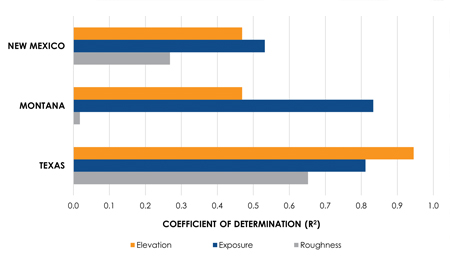
 Incorporating Exposure, Surface Roughness, and Elevation
In wind resource assessment, the conventional approach to meteorological (met) mast siting has emphasised distance, recommending maintaining a maximum separation distance between each met site and the proposed wind turbine locations. This industry-accepted method assumes that shorter distances translate to better representativeness. But is distance truly the metric that matters most?
By Liz Walls and Erin Roekle, One Power Company, USA